Nollendorfplatz
SchönebergA centre of gay and lesbian life since the 1920s. Around Motzstraße and Fuggerstraße you still find bars, bookshops and the scene.
A practical guide for gay men and the rest of the city. With hand-picked culture tips, real neighbourhood knowledge and AI tools that keep Berlin's bureaucratic madness off your back.
15° / 4°
A perfectly uniform grey sky is hanging over mild, motionless air, producing weather so aggressively uneventful that even discussing it feels like unnecessarily extending the meeting. Wear a light jacket or sweater and proceed with whatever you had planned; the atmosphere has contributed absolutely nothing today, but in fairness it has also refrained from actively ruining anything.

The city does not have a queer scene. It is one. Schöneberg was the historic centre; today Kreuzberg, Neukölln and Friedrichshain have their own spaces: freer, less defined, often threatened by rising rents.
Zur Agenda ↗A centre of gay and lesbian life since the 1920s. Around Motzstraße and Fuggerstraße you still find bars, bookshops and the scene.
One of the world's first museums of queer history. Changing exhibitions, archive, library.
The queer oriental dancefloor since 1997: pop in Turkish, Arabic, Greek and Hebrew. Usually on the last Saturday of the month.
The club closed at the end of 2025 after insolvency. Since May 2026 its association has been throwing parties at changing venues while it looks for a new home.
A neighbourhood pub with a queer crowd of regulars. No door policy, no show, just full tables.
Berlin's queer city magazine. The most reliable place for current listings if you have plans tonight.
Berlin club culture is not a music genre. It is a way of understanding the night: a space with its own rules, where identity does not need explaining.
Since 2024 Berlin techno culture has been on Germany's national inventory of intangible cultural heritage. At the same time many clubs are fighting to survive: rents, energy prices and the planned extension of the A100 motorway threaten the venues around Ostkreuz in particular.
There is no secret recipe. The door protects a space; it does not test whether you are cool enough. Do not show up as a group talking loudly about the queue. Come because you really want to be there, not for a photo. And if it does not work out tonight: the city has a hundred other doors.
Schöneberg is the historic foundation. Whoever moves here has largely traded the need for nights in dark basements for a reliable bakery and a property manager who answers. The area around Nollendorfplatz breathes history, even if today it often hides behind the façade of an organic supermarket where the legendary Eldorado once stood. It is refined, intergenerational and pleasantly unexcited. A Sunday here means coffee on Motzstraße followed by a long walk across Viktoria-Luise-Platz.
Kreuzberg is chronically exhausted but stubbornly refuses to become irrelevant. Between Mehringdamm and Kottbusser Tor the district swings between brutal tourism and a tenacious local scene. You still find excellent queer bars here, holding out in tiny rooms against soaring commercial rents. It is loud, dirty and often architecturally unforgiving, but it works on a deeply practical level. When friends visit from out of town, Oranienstraße is still a must.
For the past decade Neukölln was the undisputed epicentre of queer club culture, until property prices hit hard. The painful loss of SchwuZ, which had to leave Rollbergstraße after its insolvency, left a huge gap. Still, the district keeps pulsing, carried by a very international, English-speaking crowd that now organises in smaller collectives. A place to live for people who tolerate noise and accept the Späti as their primary food source. Schillerkiez on a Sunday is one long exercise in seeing and being seen.
Berghain casts a long shadow, and Friedrichshain has settled very comfortably into it. The district lives off the streams of weekend tourists in black outfits making the pilgrimage across the Warschauer Brücke. Away from the party strip around the RAW site, though, the area around Boxhagener Platz has become surprisingly bourgeois. People who live here value being close to the nightlife, and use it about once every three months.
The district lost the fight against gentrification twenty years ago and has made itself very comfortable in defeat ever since. Queer life here happens less on the street and more behind closed, well-organised doors. Historic anchors like the Sonntags-Club on Greifenhagener Straße remind you that East Berlin once had a defiant scene of its own. Today the oat-milk aesthetic rules. People who move here want peace and quiet, renovated old buildings and infrastructure that works.
Mitte is a paradox. It is the historic centre, yet it has become largely irrelevant to everyday queer life. Rents have successfully pushed anything subcultural to the edges, leaving flagship stores, galleries and crowds of tourists around Rosenthaler Platz. Whoever lives in Mitte probably works in tech and values being close to upmarket gyms. A walk across Museum Island or along Auguststraße is architecturally brilliant, but you will look in vain for a queer neighbourhood feeling.
Tiergarten is less a residential district than a vast green lung with a diplomatic fringe. Historically significant for its memorials and the steadfast Schwules Museum on Lützowstraße, after dark the area is known mainly for two things: total silence and the sprawling cruising areas in the park. Living on the edge of the Tiergarten means paying for discretion and long-established neighbours. Kumpelnest 3000, on the border with Schöneberg, provides the necessary, wonderfully trashy contrast to the neighbourhood's otherwise serious air.
The West is back, partly because the East has become too exhausting. Charlottenburg increasingly attracts people who no longer romanticise Berlin's rough edge and simply value tidy pavements, good restaurants around Savignyplatz and excellent transport links. The queer scene here is discreet, older and very established. A weekend starts with a visit to the Paris Bar or an excellent Asian dinner on Kantstraße.
Wedding stubbornly clings to its reputation of not being fully gentrified yet. It is rough, industrial and more honest than the rest of the districts along the Ringbahn. Rents are (still) a bit more bearable, which has led to a slow but steady migration of queer artists and collectives to the north of Berlin. If you live in Wedding, you spend Sundays at the Plötzensee lake or in the quiet, sprawling parks. There is little dedicated gay infrastructure, but plenty of room for your own initiatives and easy-going neighbours.
The island. Surrounded by waterways, Moabit is extremely central and yet consistently overlooked. The Arminiusmarkthalle is a culinary highlight, and the old buildings around the Stephankiez are architectural masterpieces. The queer presence is quiet here, but the neighbourhood fabric works surprisingly well. Living here feels like escaping the Berlin hype while being ten minutes by bike from the main station. A neighbourhood for pragmatists.
Berlin is one of the few places that reliably gets you offline. Not because the network is bad, but because the city has too much to offer.
Take the U8 towards Hermannstraße, get off anywhere and walk without a map. Berlin rewards detours.
In the warmer months strangers sing karaoke in front of hundreds of strangers. Nobody is good. Everybody is there.
Morning by the Spree while the city is still quiet. The opposite of a club night, and sometimes its best ending.
Boxhagener Platz or Mauerpark on a Sunday: an analogue recommendation engine made of chance, junk and conversation.
In many Berlin clubs your phone camera gets taped over. What happens stays with you, not in the cloud.
A lake in the Grunewald forest, reachable on the U3. Cold water, pine trees, no ads.
"I am new in Berlin. Help me experience three things in my first week that are typical of the city but not in every guidebook. Ask me about my interests and budget first."
"I am queer and new in Berlin. What kinds of community spaces are there (counselling, sport, culture, nightlife)? Give me search terms and places I can check myself, instead of making up names."
"I was in a club last night and I am still full of impressions. Ask me five questions, one at a time, that help me make sense of the night. No judgements, just questions."
"I want to build a life in Berlin. Help me make a realistic plan for the next three months: community, everyday life, creativity. Ask questions before you make suggestions."
Prompts are tools, not a replacement for real conversations, human community or professional support. Always check places and dates yourself: chatbots love inventing addresses.
Prompts for official letters, landlords and the Bürgeramt. Copy, replace the placeholders, paste into the chatbot of your choice. Ideally a model with web search, so it can check the current law. Explanations come back in English; letters to German offices stay in German.
Names, addresses, file numbers, tax ID and bank details do not belong in a chat. Replace them with placeholders.
AI can mix up legal sections and miscalculate deadlines. Check dates and legal references before you send anything.
For large sums or tight deadlines, get advice, for example from the Berliner Mieterverein (tenants' association) or a consumer advice centre.
These prompts are not legal advice. Official information on appointments and documents is on the Berlin service portal ↗
Queer oriental dancefloor, usually on the last Saturday of the month. Check current dates directly with SO36.
Since the club closed, the parties carry on as a series. The association announces venues and dates itself.
We only publish dates we can verify. Send us the venue, date and a source.
Suggest an event ↗Berlin, the city that is never finished and seems proud of exactly that, has announced a new project.
SatireBerlin wanted the Olympics. Then Berlin voted. Now Berlin would rather not. A city that knows its airport may simply have learned from experience.
Satire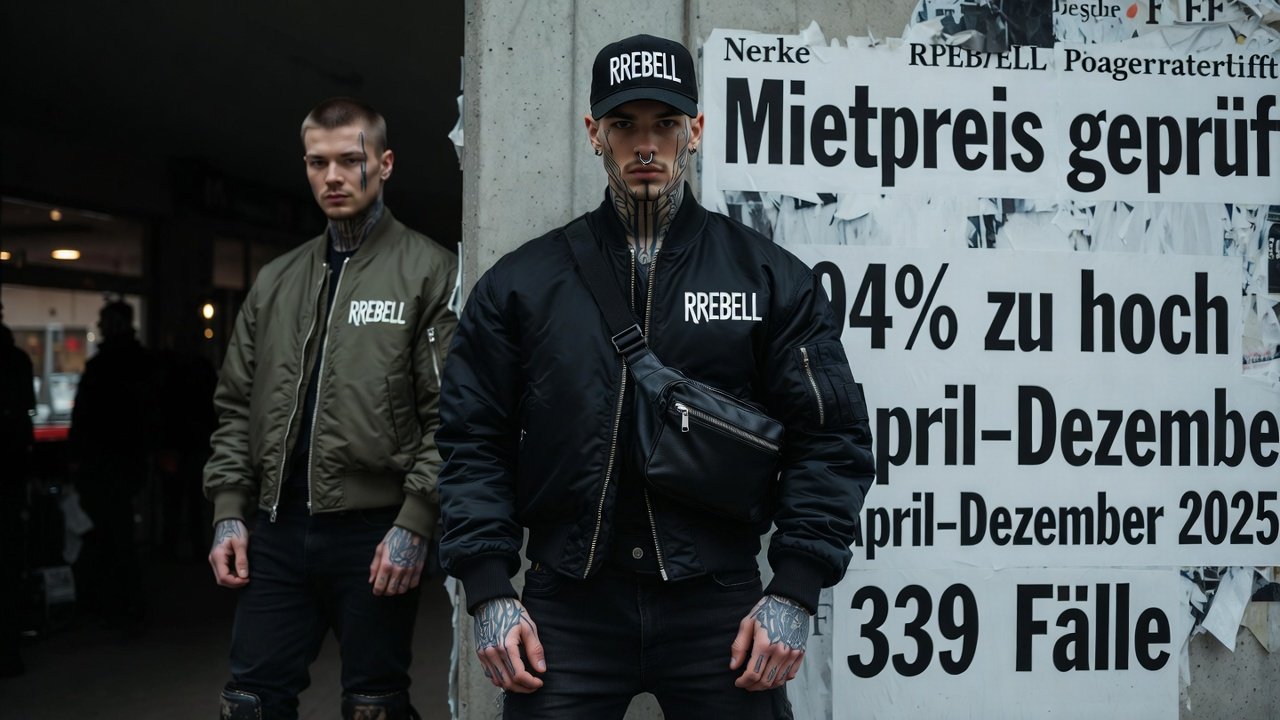
In 222 cases the rent was more than 50 per cent above the local reference rent. That is the range where people stop saying "too expensive" and start talking about suspected rent extortion, which can be a criminal matter.
Read story ↗One does not rule out the other. That is the point.
Understand AI ↗